A practical guide to bath linens
Bath Towels Explained: How Weight, Weave and Fibre Affect Everyday Use
A towel is a modest piece of engineering disguised as a household staple. Its fibre, construction and weight determine how readily it takes up water, how long it stays damp, and whether it feels plush or brisk against the skin. Knowing what those details mean makes it easier to choose a bath towel that suits the rhythm of your home.
There is a familiar moment after a bath or shower when the towel tells you what sort of towel it is. Some seem to gather water almost at once, soft and enveloping; others feel lighter, dry quickly and take up little room on the rail. Neither experience is automatically superior. The right choice depends less on an abstract idea of luxury than on use: how many people share the bathroom, how often laundry is done, how well the room ventilates, and whether you want a plush wrap or a practical cloth that will be ready again soon.
Descriptions can complicate this straightforward decision. Labels mention grams per square metre, ring-spun yarn, combed cotton, zero twist, loops, dobby borders and a parade of fibres. These terms can be useful, but they do not tell the whole story individually. Weight affects how much material is present; weave and pile shape how that material behaves; fibre contributes to the towel’s touch, strength and care needs. Together, they offer a more meaningful picture than colour or surface softness alone.
This guide explains the main considerations in plain language, with particular attention to everyday bath towels. It is not a contest to find the heaviest, thickest or most expensive option. It is a way to understand what a towel is likely to do once it leaves the shelf and enters the repeated cycle of bathing, washing, drying and folding.
What towel weight actually measures
Towel weight is commonly expressed as GSM, or grams per square metre. The figure describes the mass of a square metre of fabric. It is a useful comparison when two towels are measured and described consistently: a higher GSM generally indicates a denser, heavier towel, while a lower GSM suggests a lighter one. But GSM is not a direct score for quality, absorbency or comfort.
A heavier towel may contain more yarn and feel fuller in the hand. Its greater mass can make it seem especially substantial when wrapped around the body, and a dense pile can offer a cushioned, soft sensation. It may also hold more moisture before it feels saturated. That same mass, however, must release the water again. A thick towel can take longer to dry on a rail and may need more time in a tumble dryer, particularly in a cool or humid room.
A lighter towel can be easier to handle, pack and wash. It tends to dry more quickly, which can be a real advantage in a small bathroom, a busy household, or a home without a heated towel rail. Lightness does not mean that a towel cannot absorb well; it means that the overall construction has less mass. The details of its pile and yarn still matter.
As a broad guide, towels at the lighter end of the range often suit frequent laundering and quick turnover. Medium-weight towels offer a compromise between softness and manageable drying. Heavier towels tend to feel more enveloping, but they reward a home with sufficient airflow and drying time. Manufacturers do not always publish GSM, and different finishing methods can change how a towel feels. If the figure is available, treat it as one clue rather than a verdict.
The practical question is not “Which number is best?” but “What will this weight ask of my routine?” A towel used once and dried thoroughly overnight has different demands from one shared by several people, left in a damp bathroom, and put back into service before it is fully dry. A generous pile may be welcome in the first case and a source of persistent mustiness in the second.
The quiet mechanics of the weave
Most classic bath towels are terry cloth. The characteristic loops rise from a woven ground, creating a large surface area that can catch and hold water. The loops also give the fabric its familiar texture. When a towel is described as having a “pile,” this raised, looped surface is what the term refers to.
Loop height, density and yarn construction all affect the experience. Longer or more numerous loops can make a towel feel thick and soft, but loops are not simply decoration. They create spaces in the fabric where water can be taken up. They can also snag on rough surfaces or catch on jewellery, so a towel’s care and household use matter as much as its first impression. A high pile is not necessarily more durable: the security of the construction and the quality of the yarn play their own parts.
Some towels have cut or sheared surfaces rather than the open loops of conventional terry. A velour finish, for example, has loops cut on one side to create a smoother, almost velvety face. It can feel pleasant and may show patterns clearly, though a smooth surface is not always as quick to absorb as an uncut looped face. A towel may combine a smoother decorative side with a more absorbent terry side.
Waffle towels use a raised, recessed pattern rather than a deep, continuous pile. Their structure is often lighter and more compact, allowing air to move through the fabric and helping it dry relatively quickly. They may feel less cushioned than thick terry, but many people appreciate their lighter drape and textured surface. Waffle construction is a reminder that a towel’s performance is not determined by weight alone: surface design can make a lighter textile useful and distinctive.
Edges and borders are another part of construction. A woven decorative band can make a towel look finished, but it should not be confused with its absorbent area. The border may feel less pliable than the pile, and repeated high-heat drying can stress seams and hems. Neat, secure hems matter because they help prevent fraying through regular laundering.
Fibre: the material behind the feel
Fibre is the raw material from which yarn is made. Cotton is a common choice for bath towels because it is absorbent, comfortable against the skin and suitable for washable household textiles. Yet “cotton” is not a complete description of how a towel will feel. Staple length, yarn spinning, finishing and the design of the pile all influence its character.
Longer cotton fibres can be spun into smoother, stronger yarns with fewer exposed fibre ends. The result may feel more refined and resist fuzzing, depending on how the towel is made and cared for. Combed cotton has had shorter fibres and some impurities removed before spinning, producing a more uniform yarn. Ring-spun cotton describes a spinning method that twists fibres together to create a yarn; the exact feel and durability depend on the yarn and cloth as a whole. These terms can signal a particular approach to manufacture, but they do not guarantee that every towel bearing the same description will perform identically.
Some towels use cotton blends or fibres such as bamboo-derived viscose. A blend can alter drape, softness, drying behaviour or price. “Bamboo” on a label often refers to regenerated cellulose made from bamboo pulp rather than a towel woven from raw bamboo fibres. Fibre names and marketing language can therefore be less straightforward than they appear. For a clear comparison, check the material composition on the care label and distinguish the stated fibre from claims about the plant or process.
Linen, made from flax, is also used in household textiles. In towel form it can have a lighter, more textured character than plush cotton terry. A linen towel may feel quite different from the classic thick bath towel, and its performance depends on its weave and construction. It should not be assumed that every linen textile is intended to function as a highly absorbent terry bath sheet.
Fibre choice is ultimately a matter of feel and routine. Someone who likes a smooth, soft towel may prefer a finely spun cotton pile. Someone concerned with quick drying may value a lighter construction or a different weave. People with sensitive skin can pay attention to texture, detergent residues and fragrances as well as fibre names; no single fibre is guaranteed to suit everyone.
Absorbency is not the same as softness
Softness is immediate: the hand can judge it before the towel has been used. Absorbency is revealed in practice. A towel may feel exceptionally plush on a shop shelf yet take a moment to begin drawing in water, especially if the surface has a finish or residue that affects how water meets the fibre. Conversely, a lighter towel may feel plain at first but work efficiently once it has been washed and used.
Manufacturing finishes, fabric softener and detergent residue can affect how readily water enters a towel’s fibres. Excessive fabric conditioner is a frequent culprit. It can leave a coating that reduces absorbency and may build up over repeated washes. A towel that has become less effective is not necessarily worn out; laundering habits may be part of the explanation.
New towels sometimes shed loose fibres during their first washes. This is not always a sign of poor quality, though persistent shedding or unravelled loops deserves attention. Washing new towels separately or with similar colours can help manage lint and protect other laundry. Follow the maker’s care instructions, and avoid overloading the machine so the fabric can rinse thoroughly.
A useful way to assess performance is to observe the towel over several weeks rather than rely on a single touch. Does it take up water without repeated rubbing? Does it dry between uses? Does the pile retain a comfortable feel after washing? Does it remain intact at the edges? Those everyday answers matter more than a promise of softness alone.
Choosing for the household you have
In a well-ventilated bathroom with plenty of room to hang towels, a heavier terry towel may be entirely practical. If the room stays cool or damp, a lighter towel can be easier to keep fresh. The same consideration applies to household size. A towel that dries overnight for one person may remain damp when several family members use it throughout the day.
Think about the towel’s role, too. A bath towel needs enough surface area for comfortable drying, but a bath sheet is larger and can take longer to dry. Hand towels and guest towels are smaller, easier to launder in quantity and often changed more frequently. A beach towel is designed for a different setting: portability, surface coverage and outdoor use may matter more than the deep, thirsty pile associated with a bathroom towel.
For a shared bathroom, a balanced, medium-weight cotton towel may be a sensible starting point: substantial enough to feel comfortable, yet not so dense that drying becomes a daily challenge. A small household with ample drying space may prefer a thicker option. For travel, a lightweight or waffle-textured towel can reduce bulk. None of these choices requires a universal rule; the point is to match material and construction to the conditions in which the towel must work.
Colour and appearance also influence care. White towels make stains visible and can often be washed with other whites, while dyed towels should generally be grouped with similar colours according to their label. Decorative borders, embroidery and dark shades may have specific washing requirements. If towels are bought as a coordinated set, check whether their sizes and weights are suited to the same drying routine rather than assuming that a matching appearance means identical performance.
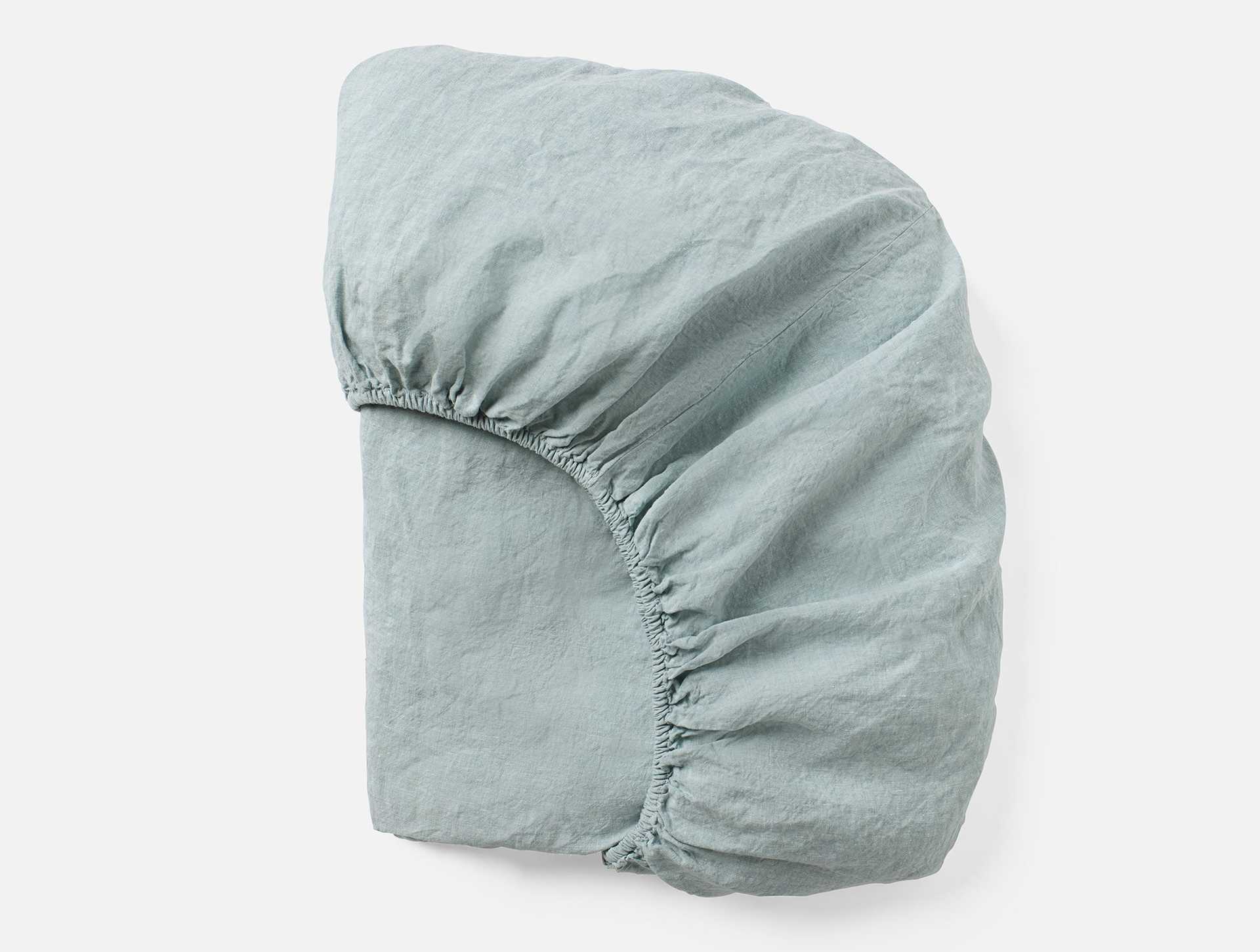
In a textile collection, there can be an instructive contrast between the weight of a dense bath towel and the drape of bedding. For example, the Organic Relaxed Linen Fitted Sheet is made from organic flax linen woven in Portugal, a breathable bed textile with a relaxed feel. It is not a bath towel, but it illustrates why fibre names alone do not define use: linen’s character in a fitted sheet is shaped by a different weave and construction from cotton terry.
A simple towel-care routine
Good care does not require an elaborate programme. It does require enough room for towels to wash cleanly and dry fully. The care label should come first, since fibre blends, dyes, finishes and construction can call for different instructions. Within those limits, a few habits help preserve both feel and usefulness.
- Wash before first use. This can remove loose fibres and manufacturing residues. Use a normal amount of detergent and follow the care label.
- Avoid overloading the drum. Towels need room to move so that water and detergent can circulate and rinse away.
- Measure detergent sensibly. Too much can leave deposits that make fabric feel stiff or less absorbent. Hard water and machine type can affect the amount required.
- Use fabric conditioner sparingly. Frequent use may coat the pile and reduce its ability to take up water. If towels have become less absorbent, try washing without conditioner and rinse thoroughly.
- Dry promptly and completely. Shake towels out after washing, then hang them with enough space for air to circulate. A towel folded over itself on a crowded rail can remain damp for hours.
- Choose heat with care. Excessive heat can stress fibres and elasticised or decorative details. If tumble drying is allowed, use the recommended setting and avoid leaving towels to overdry.
- Keep the pile clear. Trim a loose thread with scissors rather than pulling it; pulling can unravel a loop and damage the surrounding weave.
There is a reason a towel left in a heap on the floor smells different from one hung open to dry. Dampness is not a neutral state for textile: lingering moisture encourages unpleasant odours and makes the next use less inviting. Letting towels dry between uses is a small domestic discipline with a large effect on freshness.
Common towel problems, read plainly
The towel feels stiff. Mineral deposits from hard water, detergent residue, overdrying or heavy use of conditioner can all contribute. Try using the recommended detergent amount, ensuring a thorough rinse and allowing the towel to dry without excessive heat. If the label permits, an occasional suitable laundry treatment may help, but avoid improvised chemical combinations.
The towel smells musty. It may not be drying fully between uses, or it may have been left damp in the washing machine. Remove clean laundry promptly, spread towels out on a rail and improve airflow where possible. If an odour persists, wash according to the care label and make sure the towel is completely dry before folding it away.
The towel seems to repel water. Softener buildup or detergent residue may be interfering with absorbency. Reduce conditioner, measure detergent carefully and rinse thoroughly. A change in performance can be reversible, though a towel whose fibres have worn down over many years may simply be near the end of its useful life.
Loops are pulling out. Do not tug them. Snip a loose loop close to the fabric with small scissors. Repeated snagging can point to jewellery, rough surfaces, pets’ claws or damage from a sharp object. A bathroom towel is exposed to ordinary friction; keeping it away from avoidable snags helps it last.
The towel sheds lint. Some shedding is common with new towels and often lessens after washing. Wash similar items together and clean the lint filter if using a tumble dryer. Continued heavy lint, thinning patches or loose seams may indicate a construction or wear problem.
A more useful checklist than “plushest”
Before choosing bath towels, consider a short list of questions. Is the bathroom warm and airy, or does it stay humid? Will towels be washed frequently? Do you prefer a soft, dense pile, or a lighter fabric that dries quickly? Is there room to hang a large bath sheet fully open? Are the care instructions compatible with the laundry routine you actually follow?
Then compare the details available: fibre content, GSM if stated, construction, size and care guidance. A towel with a clear label and sound finishing can be a better everyday choice than one whose appeal rests on a single impressive number. If possible, handle the textile, but remember that a showroom touch is only a first impression. Repeated washing and drying tell the longer story.
It is tempting to treat heaviness as a synonym for quality. Yet an excellent towel is not necessarily the one that feels most like a blanket. A towel must absorb water, feel comfortable, dry in a reasonable time and survive repeated laundering. Those qualities are related, but they are not identical. The best balance is personal, and it may differ between a main bathroom, a guest room, a gym bag and a summer holiday.
The everyday measure
Bath towels belong to the category of objects that are noticed most when they fail. A damp, scratchy towel makes its case immediately; a well-chosen one disappears into routine, doing its work without ceremony. Weight, weave and fibre provide a practical vocabulary for understanding the difference. GSM indicates how much fabric is present, pile and weave shape the surface, and fibre helps explain the hand and care needs.
None of these properties acts alone. A thick towel may be luxurious but slow to dry; a lighter one may suit a crowded household better. Cotton terry remains familiar because its loops create a useful absorbent surface, while other fibres and weaves offer different combinations of texture, portability and drying speed. Regular, considered care helps preserve those characteristics, whatever the towel’s construction.
Choose for the life around the towel, not for an idealised bathroom. If it can be washed without fuss, hung where air reaches it and used comfortably day after day, its weight and weave are doing their job. That is a quieter standard than showroom plushness, and a more reliable one.
Frequently asked questions
Does a higher GSM always mean a better bath towel?
No. Higher GSM usually means a heavier, denser towel, which may feel more substantial and take longer to dry. Quality also depends on fibre, yarn, weave, finishing and construction. Choose a weight that suits your bathroom and laundry routine.
Are cotton towels more absorbent than other fibres?
Cotton is widely used for absorbent towels, particularly in looped terry construction. But the finished towel’s performance depends on more than fibre type: pile, yarn, finishes and laundering all matter. Check the composition and care label, then judge how the towel performs in use.
Why do towels sometimes become less absorbent?
Residue from fabric conditioner or excess detergent can coat fibres and reduce water uptake. Try using less detergent, skipping conditioner and rinsing thoroughly. A worn towel may also lose performance over time.
How can I help towels dry faster?
Shake them out after washing and hang them fully open, with space between neighbouring towels. Improve airflow in the bathroom when possible, and avoid folding a damp towel over itself on a crowded rail. A lighter towel or a less dense weave may also suit a slow-drying room.

